
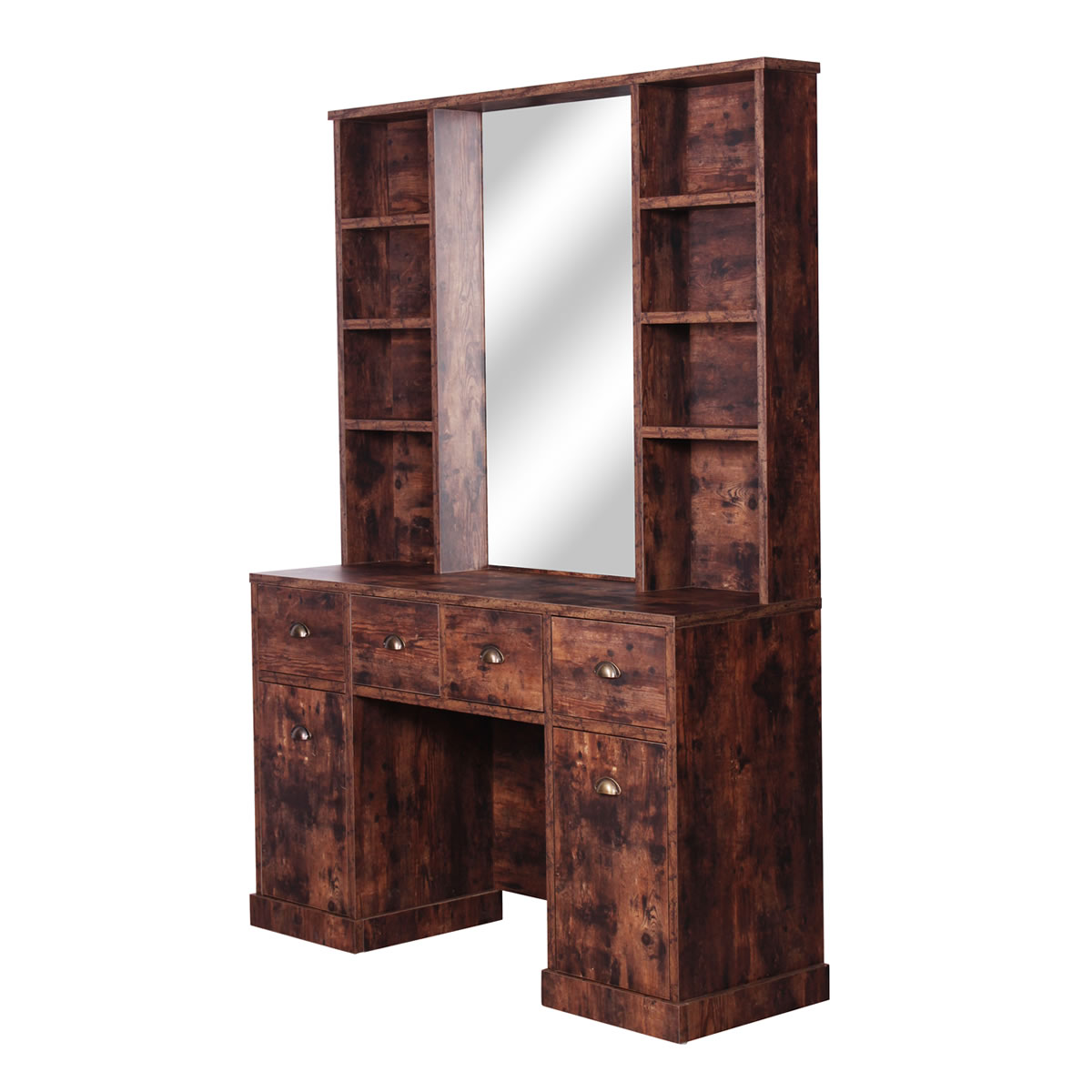
Classic Barber Station
A classic barber furniture option for shops that want storage, visual weight, and old-school presence.
$1,200.00 $1,600.00
View ROFFLER StationSalon and Barber Station Guide
Barber stations and salon styling stations may both hold tools, mirrors, products, and daily supplies, but they are not trying to create the same room. A barber station often emphasizes storage, tools, heavier visual presence, and a stronger shop profile. A styling station can be lighter, cleaner, more salon-oriented, and more flexible for color, blowouts, cuts, and styling services.
The choice is not only about furniture style. It is about what kind of work happens at the station, what the client sees in the mirror, how many tools need to stay within reach, and whether the room should feel like a classic barbershop, a modern salon, a beauty school, or a mixed-service studio.
A barber station usually carries more visual weight. It often needs room for clippers, guards, trimmers, razors, brushes, neck strips, towels, styling products, disinfectant, aftershave, combs, and daily shop tools. A good barber station should help the barber work fast without turning the counter into a pile of cords and small tools.
Barber stations also shape the identity of the shop. A classic barber station can make the room feel old-school, masculine, grounded, and deliberate. It is not just storage. It is part of the theatre of the haircut. The client sees the mirror, the tools, the chair, the station, and the shop atmosphere as one complete signal.
A styling station is usually built around a broader range of salon services. It may support haircutting, blowouts, color services, styling, consultations, and retail conversation. The station often needs counter space, a mirror, some storage, and enough openness to keep the room feeling clean.
Many salon styling stations are lighter in appearance than barber stations. They may use cleaner shapes, brighter finishes, slimmer bodies, double-sided mirrors, wall-mounted layouts, or minimal cabinet structures. That lighter profile can work well in salons where the service mix changes throughout the day.
The easiest way to separate the two is to count tools. Barbering often brings a dense set of small tools that need immediate access. Clippers, guards, trimmers, foil shavers, straight razor supplies, brushes, combs, towel systems, neck strips, and disinfectant all compete for counter and drawer space.
Salon styling can also require many tools, but the rhythm is different. Blow dryers, brushes, irons, color tools, clips, product bottles, towels, and retail samples need space, but they may not all need to sit at one heavy station. A stylist may rely more on carts, side stations, wall storage, or shared color storage.
In a barbershop, the mirror often frames the station like a stage. The client watches the haircut, the barber works close to the chair, and the station sits behind the service as part of the visual identity. A heavier station can make that whole scene feel complete.
In a salon, mirrors often need to make the room feel open, bright, and flattering. A double-sided styling station can help an open floor serve more stylists from the center of the room. A wall-based station can keep a suite cleaner and more focused. The right mirror depends on what the client sees behind them and how much visual noise the station creates.
A barber station needs counter space that can survive fast tool changes. The barber may move between clippers, guards, combs, brush, towel, product, and disinfectant repeatedly during one service. If the counter is too shallow or storage is too hidden, the station slows the work down.
A styling station needs surface space that supports product use, consultation, hot tools, brushes, clips, and sometimes color-adjacent tasks. But a salon may not want everything sitting in the open. A cleaner styling station can make the room feel more premium if the salon has enough carts and backbar storage to carry the overflow.
Many modern shops are hybrids. They cut hair, do grooming, offer color, handle blowouts, and sometimes mix barbering with salon styling. In those spaces, the choice should follow the strongest revenue activity. If most of the business is grooming and barbering, choose a barber station or a heavier station style. If most of the business is salon styling and color, choose a styling station and use carts or side storage for extra tools.
For mixed rooms, it can also make sense to separate zones. Barber chairs and barber stations can anchor one side of the shop, while styling chairs and lighter stations carry the salon side. That keeps the shop from feeling confused. The furniture should tell the customer where they are, not ask them to guess.
Both station types need cleaning discipline, but they collect mess differently. Barber stations often collect hair, small tools, clipper guards, and towel traffic. Styling stations often collect product bottles, brushes, clips, dryer cords, irons, and color tools. The station should make daily reset easy.
Check whether the drawers, shelves, tool holders, and cabinet areas are easy to reach. Look at where cords will fall. A station that looks beautiful but creates cord chaos will age badly in a busy room. Tool access and cleanup are not minor details; they are the daily tax of the furniture.
A heavy vintage barber chair next to a light minimalist salon station can look mismatched. A slim salon styling chair next to a bulky old-school barber station can feel equally strange. The station and chair should speak the same visual language.
Classic barber chairs usually pair well with stations that have stronger storage and a more substantial body. Modern salon chairs often work well with cleaner stations, double-sided mirrors, white finishes, black finishes, or slim storage. Beauty schools may care less about romance and more about durability, storage, and repeatable layout.
Use these AGS BEAUTY station options as starting points when comparing barber furniture, salon styling stations, beauty school stations, shared stylist layouts, tool access, and shop identity.
Classic Barber Station
A classic barber furniture option for shops that want storage, visual weight, and old-school presence.
$1,200.00 $1,600.00
View ROFFLER Station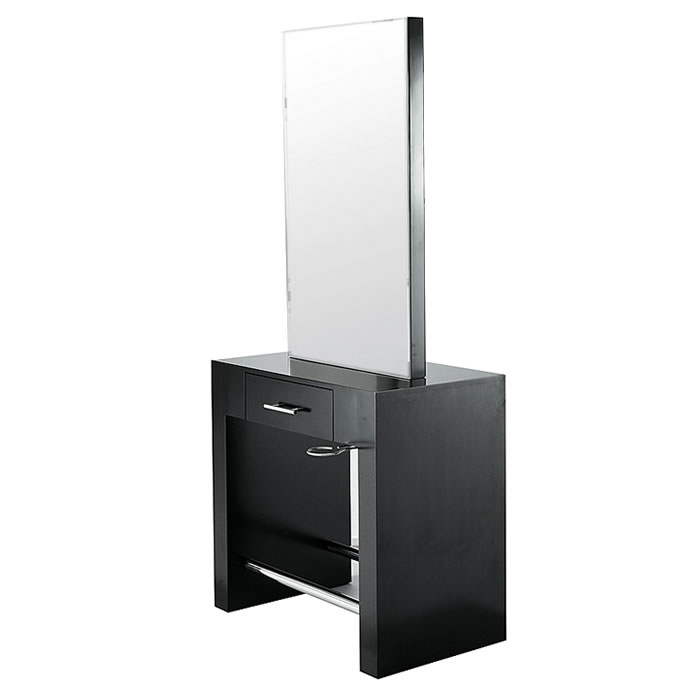
Double-Sided Styling Station
A space-saving double-sided station for shared rooms, open layouts, and multi-stylist salon floors.
$480.00 $620.00
View AMBIENCE Station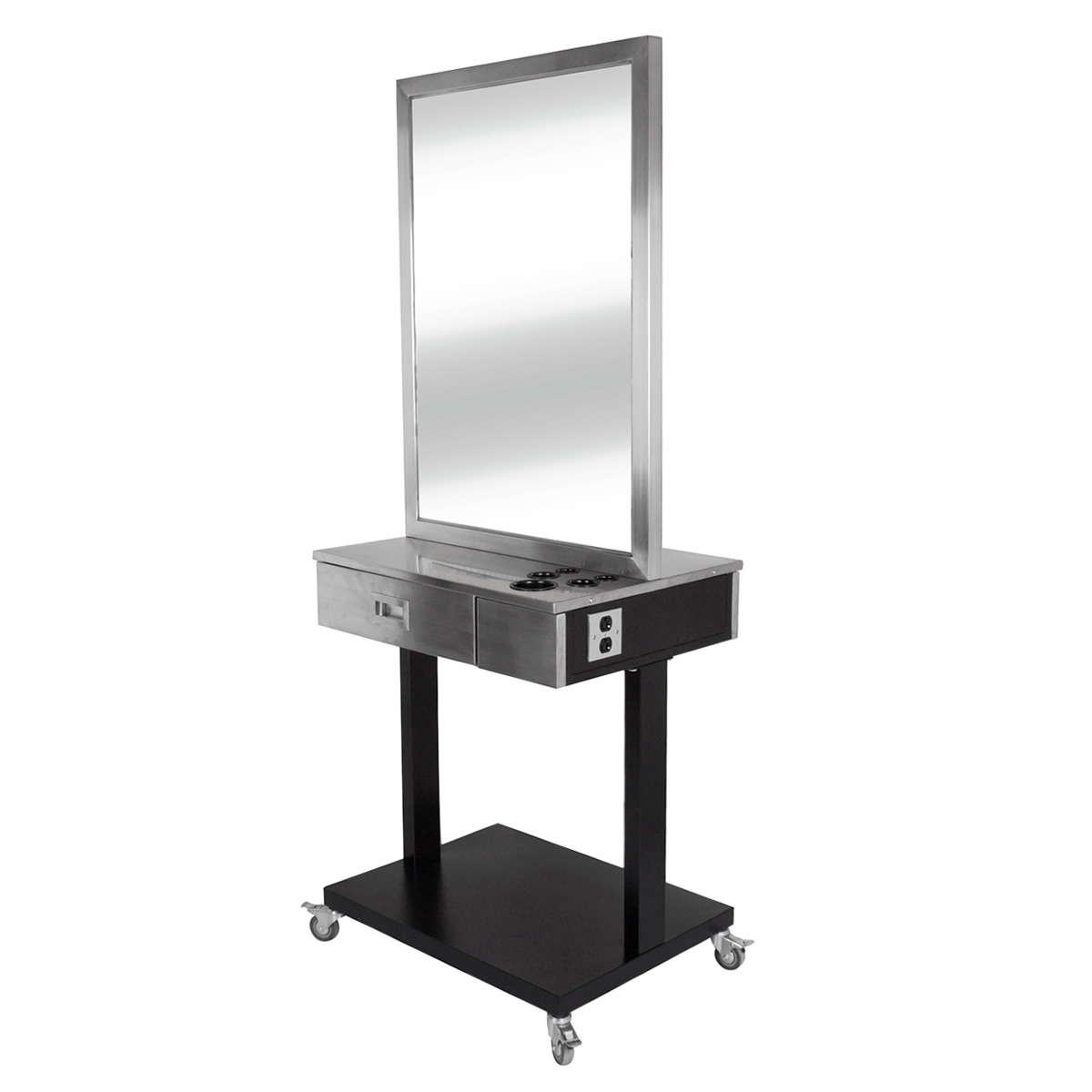
School and Training Station
A stainless steel station option for beauty schools, training rooms, and high-use salon environments.
$780.00 $980.00
View LUMINA Station
Modern Salon Station
A white double-sided salon station for clean modern rooms, storage planning, and shared stylist layouts.
$1,400.00 $1,880.00
View SIENA StationNeed help comparing barber stations, styling stations, beauty school stations, or double-sided salon stations? Contact AGS BEAUTY before ordering so you can match storage, tool access, visual style, and delivery planning to your actual shop layout.
Ask AGS BEAUTY